


VIOFO A229 Plus vs Redtiger F7NP
Compare recording modes, parking power and the exact camera version
Which would we choose?
We would choose the VIOFO A229 Plus 2CH for a front-and-rear setup when dual 1440P recording and buffered parking events are the priorities. Its documented feature set gives us a clear basis for that recommendation, without treating resolution alone as a guarantee of readable plates.
If you're considering the F7NP, start with the seller's exact camera revision. The older European FAQ and the December 2024 V2.3 manual differ from the current US listing. Match the camera to its regional manual and firmware before comparing features.
Mounting, screens and everyday fit
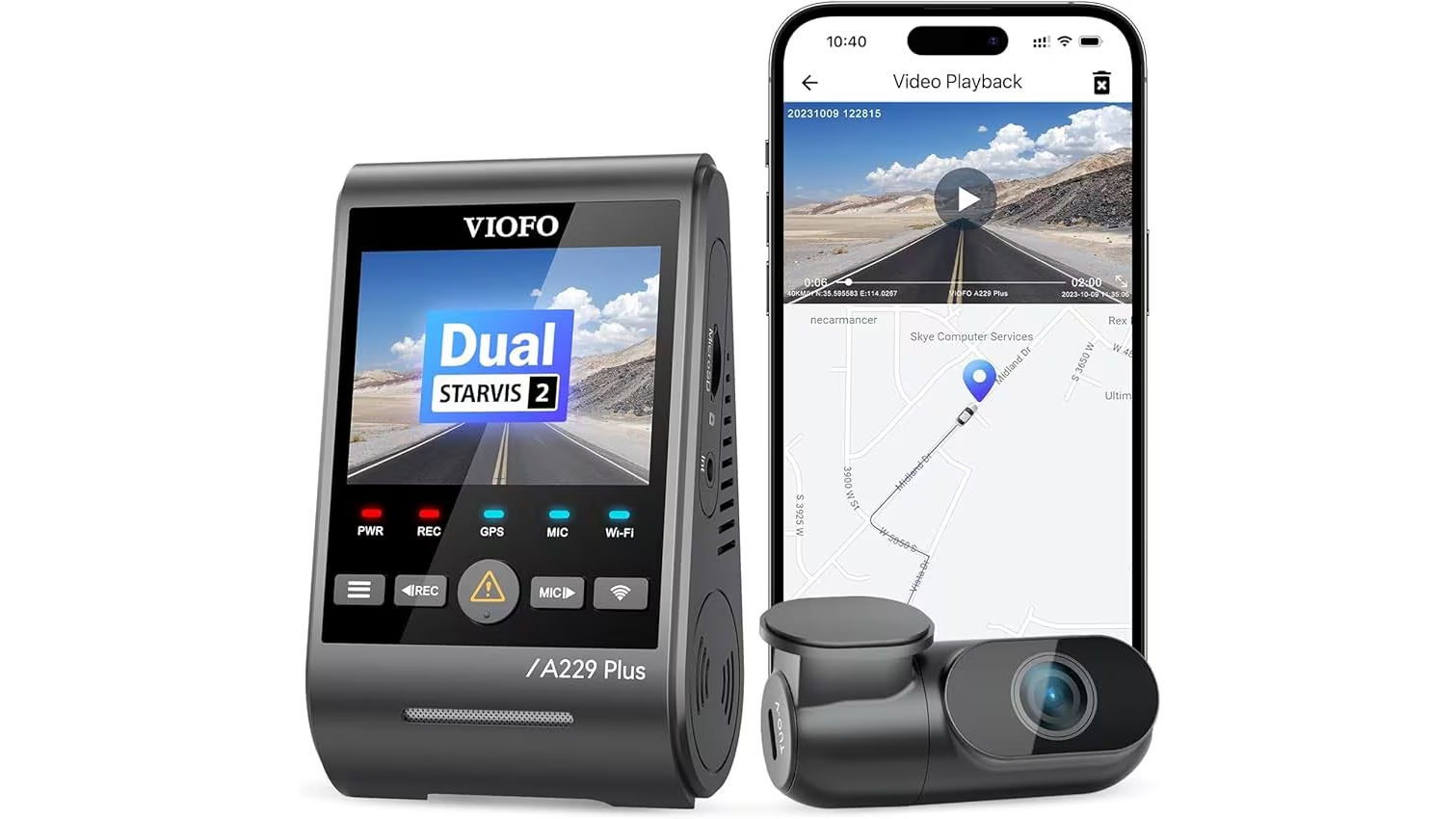
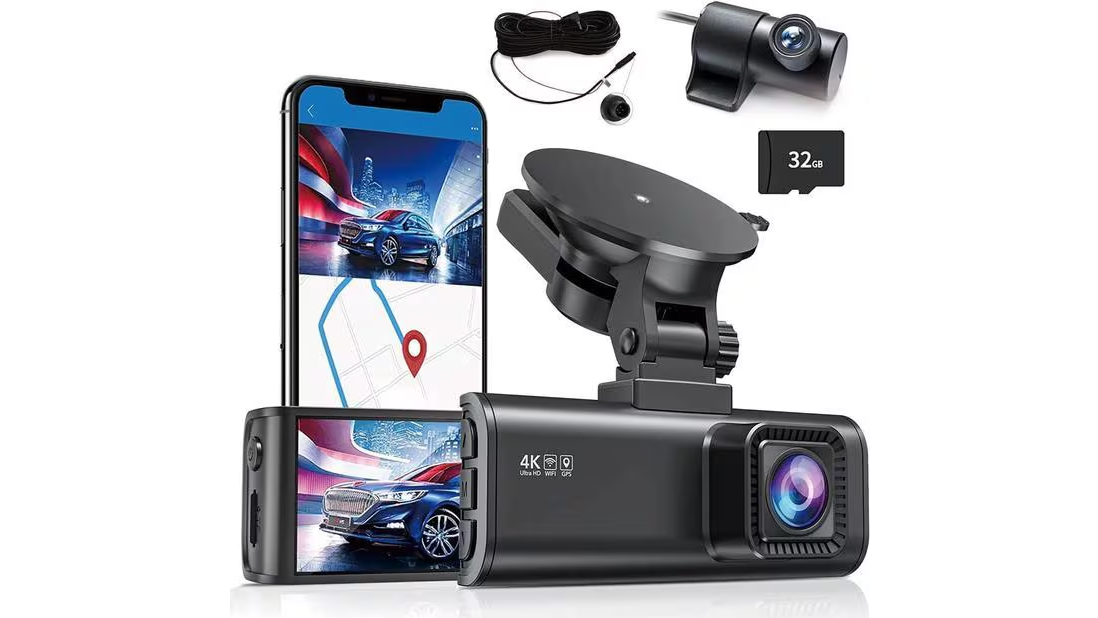
The A229 Plus uses an adhesive windshield mount and has a 2.4-inch display. The documented F7NP uses a suction mount and a 3.18-inch display. Those choices affect where the camera sits and how you reach its controls; a larger screen can be useful, but check the driver’s view before choosing a location.
We would plan the rear camera position and cable route before installing either system. A rotating camera housing does not increase the image’s field of view. Use the mounting materials specified for the exact kit, and do not assume pictured stickers make removal residue-free or make a complete installation transferable between vehicles.
Recording: compare the mode, not just the 4K UHD label
VIOFO specifies Sony STARVIS 2 IMX675 sensors in both A229 Plus cameras. The front can record 1440P at 60 FPS with the rear at 1440P 30 FPS when HDR is off. With HDR enabled, the documented front-and-rear rate is 30 FPS. The listed fields of view are 140 degrees front and 160 degrees rear.
For the F7NP, Redtiger’s 2026 US buying guide describes its 4K UHD output as upscaled. The US F7NP listing specifies a 3840 × 2160 output and describes STARVIS 2, while a European F7NP page calls it native 4K. Output dimensions alone do not establish the sensor’s native pixel count. Confirm the exact version with the seller instead of assuming every F7NP unit is identical.
The F7NP V2.3 manual lists front-only 2160P at 30 FPS, plus dual-camera 2160P + 1080P FHD and 1440P + 1080P FHD modes. It does not specify the dual-mode frame rate in that table. Ask for the frame rate of your chosen front-and-rear mode rather than assuming the front-only rate also applies with the rear camera connected.
Compare video examples
Compare clips using the camera settings and recording conditions as well as the headline resolution. The players below provide video examples; resolution alone does not settle plate readability.
VIOFO A229 Pro and Plus Dash Cams | Sample Footage
Video by BlackboxMyCar Dash Cams | North America.
Redtiger F7NP Faster Speed Footage at 2K 60FPS | Best Dash Cam 2023
Video by Dirk On Tech. The uploader’s title does not establish the frame rate for a current front-and-rear configuration.
Parking coverage begins with the power plan
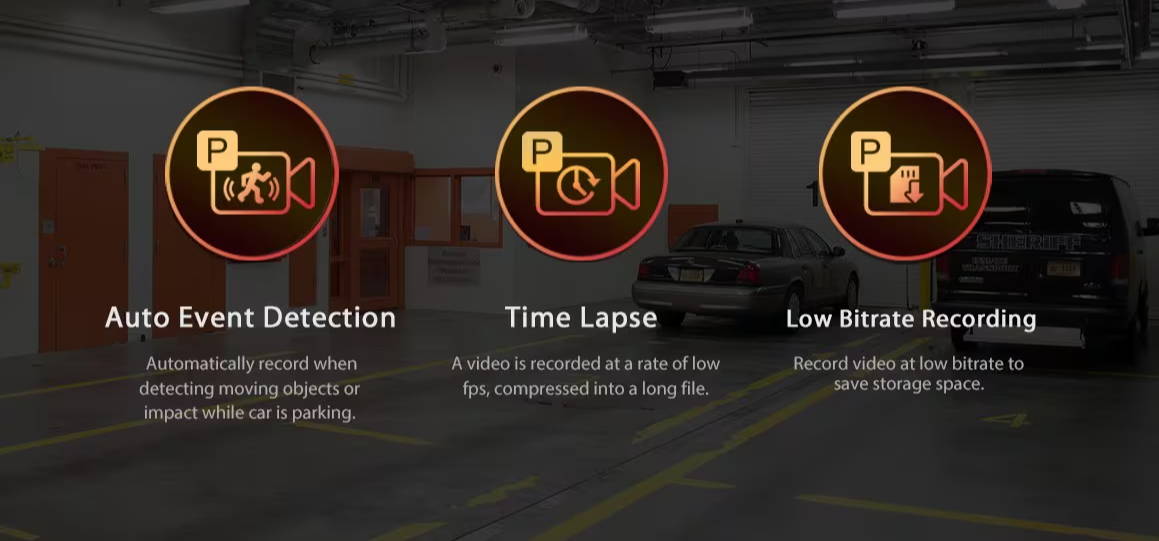
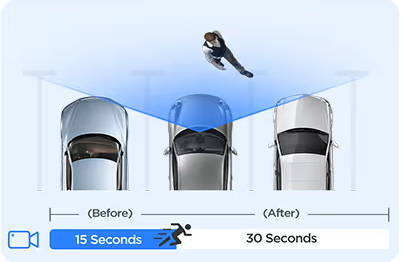
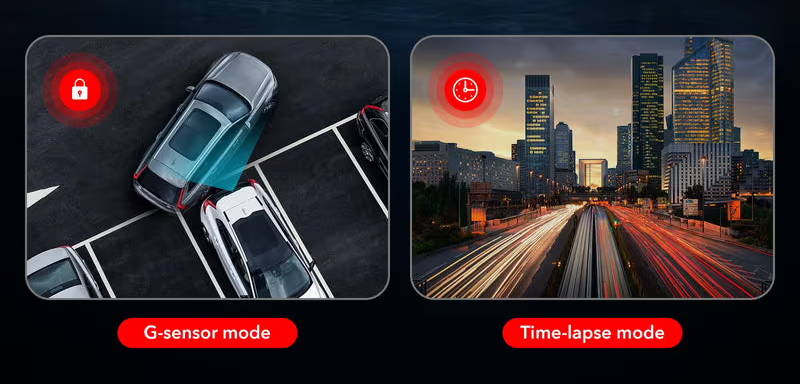
The A229 Plus offers buffered Auto Event Detection, time-lapse and low-bitrate recording. In buffered event mode, VIOFO documents a clip containing 15 seconds before and 30 seconds after an event. The camera needs power while it maintains that pre-event buffer; it is not sleeping with the camera completely off.
VIOFO lists the optional HK4 hardwire kit for parking operation. Choose the power connection and parking trigger for your exact installation. A supercapacitor helps the camera finish its shutdown process; it is not a battery that runs parking recording after external power is removed.
Buffered events and wake-after-impact are different
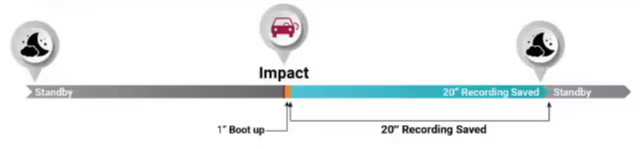
The older F7NP European FAQ describes G-sensor parking mode as shutting down, then waking to record after an impact. That cannot recover the moments before the impact. Its time-lapse mode is a separate recording option, and the F7NP manual calls for an ACC hardwire kit for parking operation.
The two illustrations below explain that distinction. The buffered diagram matches the documented A229 Plus event sequence. The wake-up diagram carries example timing labels that we have not verified for an exact F7NP unit. Confirm the modes on the unit you are buying rather than assuming every F7NP revision follows either diagram.
How long do you leave the car parked?
If you drive infrequently, start with the time between drives and how the power source will recharge. Buffered recording consumes power while waiting for an event; wake-after-impact recording gives up pre-event footage. Neither mode promises a fixed number of hours across vehicles, temperatures and battery conditions.
Our PowerCell 8 dash cam battery pack is another power option to discuss with us. The camera still needs the correct compatible output cable and parking trigger. Tell us your camera, vehicle and driving schedule so we can help plan the setup before you order accessories.
Wi-Fi, voice controls and saved clips
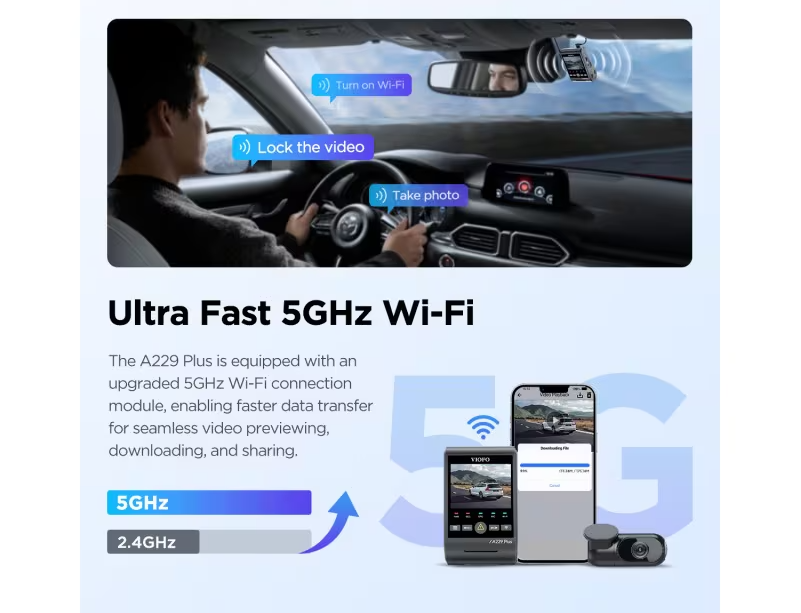
The A229 Plus supports 2.4 GHz and 5 GHz Wi-Fi, voice commands and voice notifications. Voice prompts announce camera status; commands let you control supported functions. An optional remote serves a different purpose from Wi-Fi file transfer. Transfer time also depends on your phone, file size and connection.
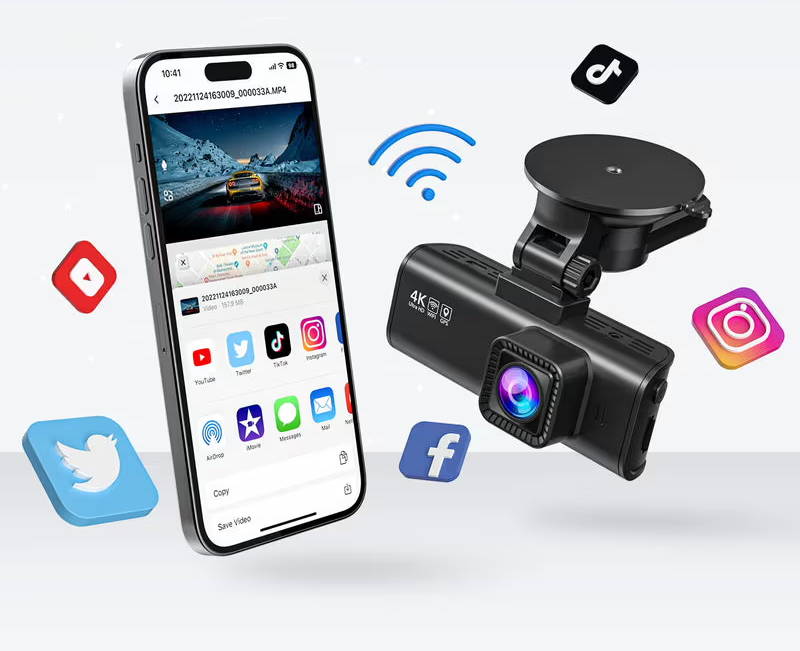
For the F7NP, the older European FAQ lists 2.4 GHz Wi-Fi, while the current US listing advertises 5.8 GHz Wi-Fi 6. The V2.3 manual describes app playback, downloads and sharing. Use those documented functions to review and save a clip. The cited F7NP documentation does not list voice control.
These camera-to-phone Wi-Fi connections are local. They do not, by themselves, let you check a parked car remotely over cellular. Export an important clip before routine recording overwrites it, and check that the saved file plays on your phone or computer.
GPS and memory cards
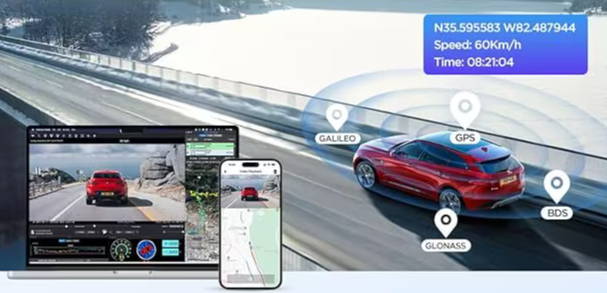
The VIOFO positioning illustration labels GPS, GLONASS, Galileo and BDS. The F7NP manual documents GPS information and route playback. A longer list of satellite systems does not establish better accuracy in every location, and GPS logging is not remote vehicle tracking.
The A229 Plus supports a microSD card up to 512 GB. The F7NP V2.3 manual and European FAQ specify 32 GB to 256 GB. Redtiger’s current US materials have presented conflicting capacity information, so confirm the supported card size for the exact unit. A maximum supported size does not mean a card is included.
Features at a glance
Swipe sideways on a small screen to see all columns. You can also focus the table and use the arrow keys.
| Feature | VIOFO A229 Plus 2CH | Redtiger F7NP |
|---|---|---|
| Camera illustrations | |
|
| Front + rear recording | 1440P + 1440P; front up to 60 FPS with HDR off | V2.3: 2160P + 1080P FHD or 1440P + 1080P FHD; dual FPS not stated |
| HDR and sensor basis | STARVIS 2 IMX675 front and rear; HDR uses 30 FPS | Current US listing describes STARVIS 2 and front HDR; older FAQ differs |
| Display and mount | 2.4-inch display; adhesive windshield mount | 3.18-inch display; suction windshield mount |
| Parking approach | Buffered event, time-lapse and low-bitrate modes with suitable power | Older FAQ: wake-after-impact or time-lapse; verify the purchased revision |
| Wi-Fi | 2.4 GHz and 5 GHz | Older EU FAQ: 2.4 GHz; current US listing: 5.8 GHz Wi-Fi 6 |
| Memory-card capacity | Up to 512 GB | V2.3 manual: 32 GB to 256 GB; confirm current unit |
| Voice commands | Supported | Not listed in the cited F7NP documentation |
| Power reserve | Supercapacitor; external power required | Supercapacitor; external power required |
For price, included accessories and warranty coverage, check the exact listing and regional terms when you buy. A supercapacitor also does not remove the camera’s operating-temperature limits. The V2.3 F7NP manual lists −20°C to 70°C (−4°F to 158°F); use the instructions for your own unit.
Questions we would settle before buying
Is every F7NP an upscaled 4K UHD camera?
Redtiger’s 2026 US buying guide describes F7NP 4K UHD as upscaled, while its European F7NP page calls it native 4K. Check the exact unit’s specification and sample files before buying.
Can the A229 Plus record 60 FPS with HDR?
The documented front 60 FPS mode uses HDR off. Front-and-rear HDR recording uses 30 FPS. Check the selected mode after changing firmware or settings.
Does parking mode work without hardwiring?
It still needs a suitable external power source and the correct parking trigger. A compatible dash cam battery setup may be an option; ask us to check its wiring and output for your camera.
Which is better if I want a smaller front-only camera?
That is a different comparison. Our VIOFO A119 Mini 2 vs. Redtiger F7NS guide covers those two names. F7NS specifications should not be transferred to the F7NP.
Manufacturer references
For the specific features above, see VIOFO’s A229 Plus 2CH specifications, Redtiger’s F7NP V2.3 manual, the F7NP European FAQ and the current US F7NP listing. These sources describe different F7NP configurations, so match them to the unit you are considering.
Choose your front-and-rear setup
Compare the current VIOFO options, then choose the kit that fits your recording and parking needs
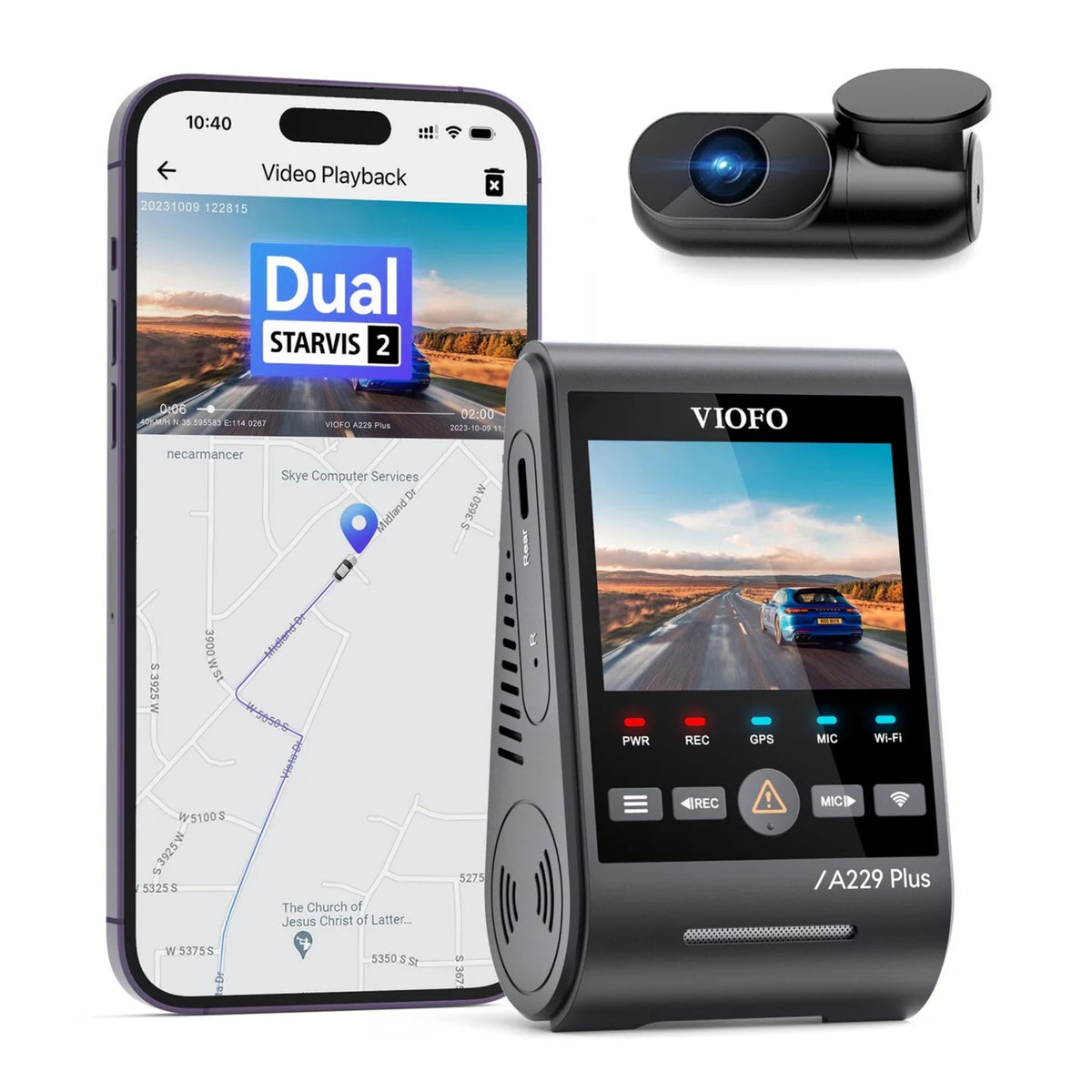
VIOFO A229 Plus 2CH
Choose this model to build around the dual 1440P and buffered parking features discussed here.
Shop Now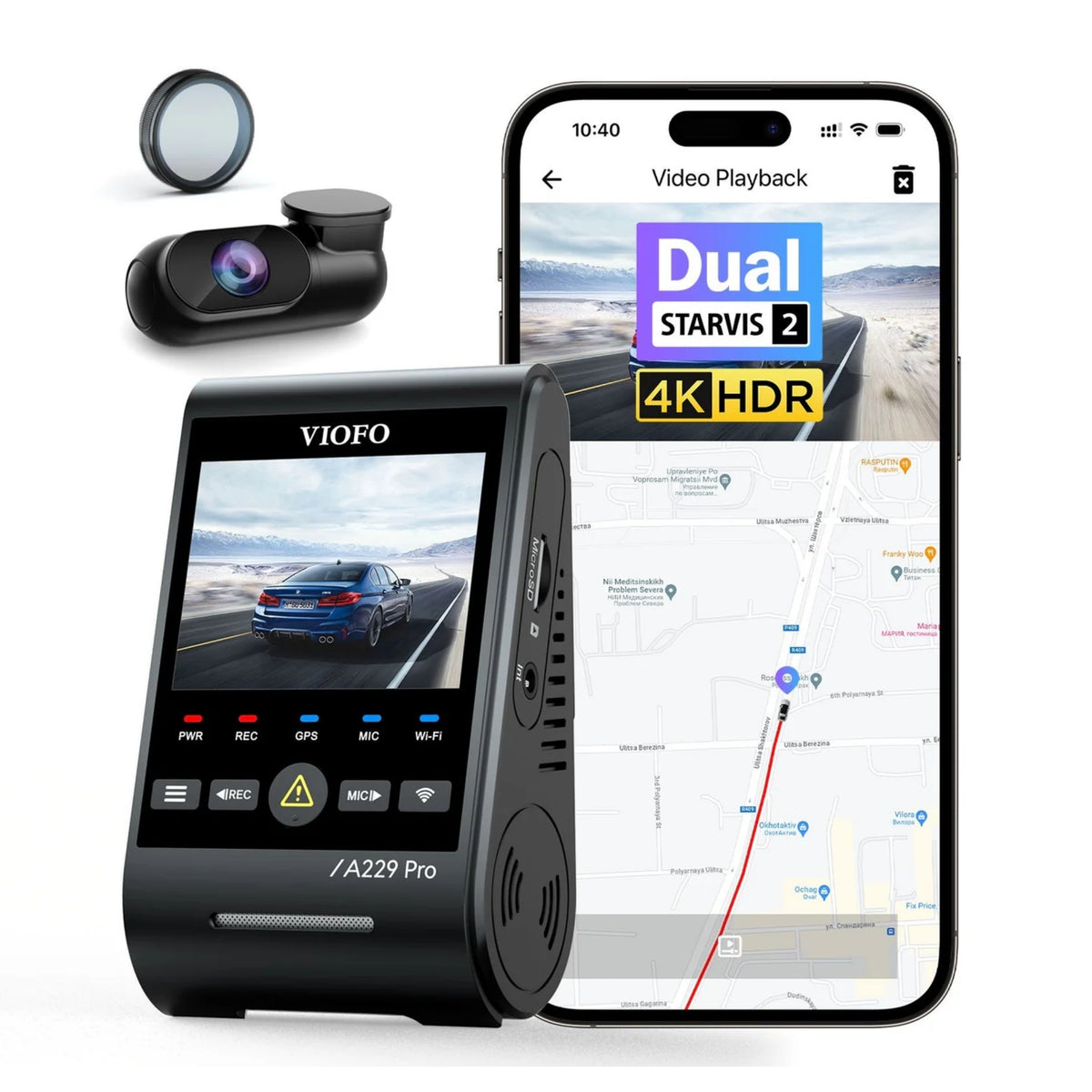
VIOFO A229 Pro 2CH
Compare this front-and-rear alternative with the Plus. Open the listing for the exact current configuration and included accessories.
Shop Now
VIOFO A329S 2CH
Explore this other front-and-rear VIOFO option. Confirm the selected kit and accessories on the product page.
Shop NowWe can help compare the camera, parking power and installation requirements for your vehicle. Contact our team for a recommendation.