


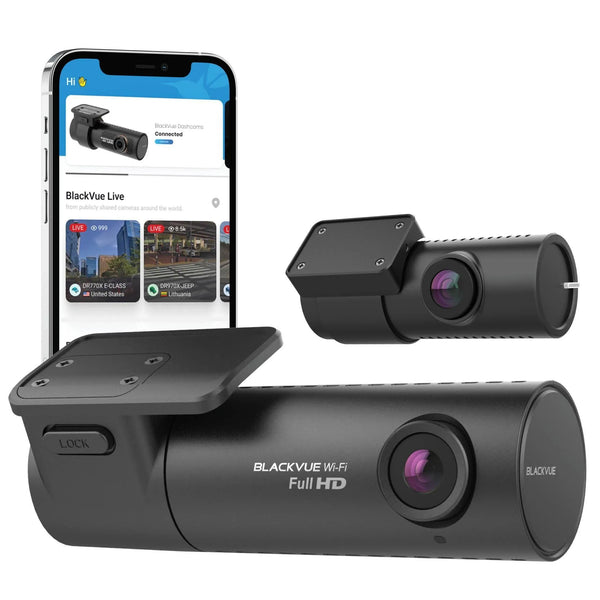


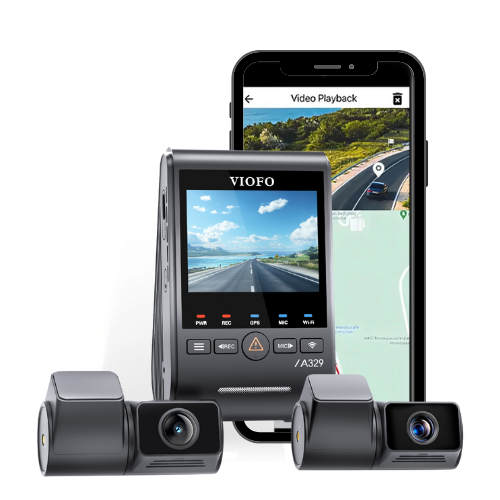


Setting Up with an Add-a-Fuse Kit
For a Professional-Looking Installation During a Hardwiring Kit Installation
What is an Add-A-Fuse Kit?
For those seeking a more streamlined and effective installation, an add-a-fuse kit is an excellent choice. An Add-a-Fuse Kit, sometimes called a fuse tap or fuse adapter, is used to expand the circuitry in your car's fuse box.
Essentially, it allows you to add a new connection to an existing fuse or even create a new circuit in an empty fuse slot. Add-a-fuses may power any accessory or gadget-not just a dash cam-by inserting them into already-existing fuse slots.
If you’re wondering where you can get them, we recommend you purchase the BlackboxMyCar Essential Install Kit. Need a comprehensive guide to hardwiring your dash cam?

Add-a-Fuse Kits

Fuse Taps
For everything you need to install a dash cam, purchase our Essential Installation Kit which comes with add-a-fuses & the fuses you need.
Recommended installation gear
For an add-a-fuse dash cam install, start with the right fuse taps and a way to test power before you crimp. These are the parts we recommend most often for this job.

Essential Install Kit
The cleanest starting point for most hardwire installs. Includes the common fuse taps and fuses needed for dash cam or battery-pack setups.
Shop Now
Add-A-Fuse Kit
Use this when you already know your fuse type and only need the fuse taps for the job.
Shop Now
Circuit Tester
Use it to confirm ACC and constant fuse slots before you crimp anything. Cheap tool, expensive mistake avoided.
Shop NowQuick rule: use the Essential Install Kit if you want the common fuse taps in one package, use the Add-A-Fuse Kit if you already know the fuse style, and use the Circuit Tester to confirm ACC and constant power before wiring.
Which add-a-fuse do I need?

Micro2 Fuse

Mini Fuse

ATO (Regular) Fuse

Low-Profile Fuse
When purchasing your add-a-fuse kit, the first thing to do is to make sure that the fuse tap is compatible with the voltage requirements for the new equipment you are about to install, and the fuse box of your car.
To ensure compatibility with your specific fusebox, there are 4 variations of the add-a-fuse that we carry: Micro2 Fuse, Mini Fuse, ATO Fuse and Low-Profile Mini Fuse. This covers the vast majority of vehicles, though there are some specific models with unique fuse types, like Micro 3, or slight variations that make it a difficult fit.
The best way to figure out what type you have will always be pulling a fuse out of the fusebox, and identifying it by the teeth and shape. You can also consult your vehicle owner's manual, search for the answer online, or consult the manufacturer/dealership the vehicle was purchased from.
What should I consider before using an Add-A-Fuse?
As for the Voltage requirements, the maximum tolerance of a fuse, or the greatest amperage of power it can withstand, is indicated by the number on the back of any fuse. The fuse will blow when this tolerance is exceeded, cutting off power to whatever it is attached to. These act as a shield for your connections, so that in the event of a power surge, your systems aren’t overloaded and fry, which would cause you to replace the entire system.
On the other hand, the ordering of the add-a-fuse is also crucial if you're connecting to an existing fuse. As your first line of defence, make sure the existing fuse goes on first, closest to the add-a-fuse's legs - this fuse needs to be larger or equal to the fuse you add after. It’s because all the power is going to go through this first fuse, both the original draw of the fuse, plus the added draw from your dash cam.


Then, the added fuse from your kit should go second, and should be equal or less than the original fuse. Take note: the only power draw that will go through this second fuse is going to be from your added connection, your dash cam or other device. While a large fuse is technically usable, it won’t really be protecting anything, as the first fuse will always trip first. If you’re using an empty fuse slot, simply put the one fuse tap in the first position.
Most importantly, please avoid using any of the fuse slots that are utilized by important parts of your car, like the engine modules and airbags. This is to prevent any worst-case scenarios, as if anything goes wrong, it’s important not to lose these core functions.
It's important to note that if the add-a-fuse is installed backwards, where power flows into the leg opposite the one labelled as 12 volts in the diagram, the nif the add-a-fuse is installed backwards, where power flows into the leg opposite the one labelled as 12 volts in the diagram, that the new fuse would be bypassed and thus not protect the new circuit.
How do I install an add-a-fuse kit?
This video shows you how to attach a fuse tap onto your add-a-fuse, as well as using a crimping tool (ie. needle nose pliers) to attach the cables of your hardwire kit into it.
Step 1: Gather the materials needed
Firstly, gather the necessary tools for the installation - your dash cam’s hardwiring kit, an add-a-fuse kit, a crimping tool, and a circuit tester or multimeter.
Shop our Essential Install Kit for everything you need.
The hardwire kit comprises three wires: an accessory wire, a constant wire, and a ground wire. Note that the ground wire is typically black, while the functions of the yellow and red wires may vary based on your camera model. Check the label on each cable to ensure their functions.
Step 2: Locate your vehicle’s fuse box
To begin the installation, locate your vehicle's fuse box, commonly found under the steering wheel, in the glove box, or in the front footwell. In case of multiple fuse boxes, choose the one closest to your camera installation point. Some fuse boxes may have a panel or cover that needs to be removed.


Step 3: Select the fuse slot
After that, it’s time to select a suitable fuse slot. Safer options are those associated with non-critical components like the sunroof, radio, moonroof, or cigarette lighter, with easily testable functions. The cigarette lighter socket fuse, in particular, is a preferred choice for an ignition connection due to its minimal power usage and consistent on/off behaviour with the vehicle, which is easily testable, and generally idle.
Again, before committing to a fuse, test it with a multimeter or circuit tester both when the vehicle is on and off. Once you've identified proper ACC and Constant connections, proceed to crimp the hardwire kit wires to the add-a-fuses.
With the engine off and your key out of the ignition, use the circuit tester to find a constant fuse. If the fuse lights up your circuit tester, you’ve got a constant fuse.
Next, you’ll need to find an ignition-switched fuse. A switched fuse will read cold while your engine is off, with no response from the circuit tester. Turn on the ignition of the vehicle, and if the circuit tester lights up, you’ve found your ignition-switched ACC fuse.
Step 4: Crimp the wires
Next, use a crimping tool or needle nose pliers to trim the rubber tubing and expose the wiring on the hardwiring cable, so that some of the bare cable is showing. Connect the cable to the other end of the add-a-fuse, the plastic tube. Then, the metal sleeve of the connector is compressed around the exposed wire using a crimping tool. After crimping, apply some force to tug on the add-a-fuse from both ends and to ensure a tight connection.


Step 5: Ground the wires
Next, prioritize grounding the cable first to avoid electrical issues. Connect the black ground wire to an unpainted metal bolt in your vehicle.
Most cars have an obvious ground point near the fuse box, possibly already used by existing components. Loosen the bolt, attach the ground pincers, and then re-fix the bolt. If your ground cable is a full circle, you can fully remove the bolt before fixing the ground or even cut open the grounding circle.
Step 6: Put back the add-a-fuse
Finally, put the add-a-fuse back into the fuse slot. Once all steps are completed, the add-a-fuse simply needs to be inserted back into the slot from which the fuse was removed.

Recommended dash cam battery packs
If you are using an add-a-fuse setup for parking mode, a dedicated battery pack is usually the cleaner recommendation than pulling parking-mode power directly from the vehicle battery.

BlackboxMyCar PowerCell 8
Best all-around battery recommendation when you want stronger parking-mode runtime and flexible output-cable options.
Shop Now
BlackboxMyCar PowerCell 5
Compact LiFePO4 battery option for cleaner parking-mode installs where size and USB-C convenience matter.
Shop Now
VIOFO BP100
VIOFO's LiFePO4 battery option for VIOFO-focused installs and parking-mode setups.
Shop NowBattery pack add-a-fuse notes
Wiring a battery pack changes the install because most battery packs use a simpler 2-wire connection: accessory power and ground. Reputable battery packs also include fuse taps or wiring accessories rated for battery use.
For higher-current battery packs like the BlackboxMyCar PowerCell 8, the fuse slot needs to handle more draw than a normal dash cam hardwire kit. Batteries can pull significantly more power because they are charging themselves while later powering the dash cam after the vehicle shuts down.
Use a suitable fuse circuit, typically in the 20A to 30A range, and make sure the secondary add-on fuse is rated for the battery pack draw. The secondary add-on fuse tap should be rated at 10A or above for higher-current battery installs.
Use a circuit tester or multimeter before final crimping. The goal is simple: confirm the circuit behaviour, avoid critical vehicle systems, and avoid stacking too much load on one fuse slot.
Common Issues When Hardwiring
Wiring a battery pack introduces some changes to the process, both advantageous and challenging. On the positive side, it simplifies to a 2-wire connection, requiring only accessory and ground connections. Plus, reputable batteries often come with complete sets of add-a-fuses, pre-rated for battery use.
Speaking of proper ratings, it's crucial to understand that modern batteries, exemplified by our top-tier BlackboxMyCar PowerCell 8, operate in high and low charging modes, capable of drawing up to 9A of power on high. In simpler terms, batteries demand significantly more power than dash cams, serving the dual purpose of powering the dash cam and storing energy for use when vehicle is shutdown.
To accommodate this higher power draw, connecting to a fuse capable of handling a heavier load becomes necessary, typically between 20A-30A. Given the battery's maximum draw of 9A, the secondary add-on fuse tap should be rated at 10A or above. It's advisable to utilize a multimeter to measure the active power flowing through the existing fuse already, ensuring that combining that initial draw with the draw of the battery does not surpass the fuse's limits and avoiding overloading.
Ideally, finding a fuse that experiences relative inactivity during daily driving is preferred. This allows the battery to have its dedicated fuse for drawing power. Additionally, our installer recommends starting off batteries to draw power on low initially, letting them run for a few days before increasing to high if necessary. This approach ensures a proper setup before introducing a heavier load to the fuse.
Add-A-Fuse Kit FAQ
What fuse tap do I need for a dash cam?
Pull the original fuse and match the blade shape first. Most vehicles use Micro2, Mini, ATO, or low-profile Mini fuses, but some vehicles use less common fuse types.
What installation parts should I buy for an add-a-fuse install?
For most installs, start with the Essential BlackboxMyCar Install Package. If you already know your fuse type, the BlackboxMyCar Add-A-Fuse Kit is enough. Use a circuit tester to confirm ACC and constant fuse slots before crimping.
Which battery pack should I use with an add-a-fuse install?
We recommend the BlackboxMyCar PowerCell 8 for stronger parking-mode runtime, the BlackboxMyCar PowerCell 5 for compact installs, and the VIOFO BP100 for VIOFO-focused battery setups.
Should I use ACC or constant power for an add-a-fuse dash cam install?
For a standard 3-wire hardwire kit, use both an ACC fuse and a constant fuse. For many dash cam battery pack installs, use an ACC fuse and ground because the battery powers the dash cam after the vehicle shuts off.