Installing a VIOFO A229 Plus Duo in a 2023 Dodge Challenger Scat Pack (When the Fuse Box Is in the Trunk)
TLDR: Today, we’re excited to be installing a VIOFO A229 Plus Duo into a 2023 Dodge Challenger Scat Pack! The 2023 Challenger represents the end of an era, with.
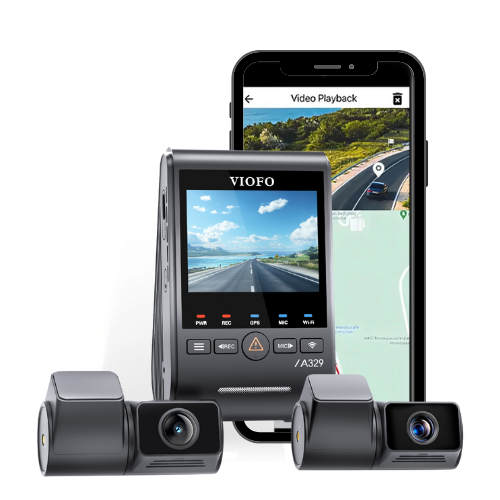
Today, we’re excited to be installing a VIOFO A229 Plus Duo into a 2023 Dodge Challenger Scat Pack!
The 2023 Challenger represents the end of an era, with the new 2-door variant of the Charger taking its place. The Challenger Scat Pack caters to those seeking the classic American muscle formula, with raw, naturally-aspirated V8 power and rear-wheel drive providing an experience that the new Charger’s turbocharged 6-cylinder engine and all-wheel drivetrain can never replicate.
It's only fitting that we outfit it with our best-selling system, the VIOFO A229 Plus Duo. It provides solid protection and video quality, featuring dual Sony STARVIS 2 IMX675 2K sensors and HDR, all without breaking the bank.
This guide will also apply to other Dodge/Chrysler models and other vehicles with fuseboxes located in the rear. For more advice on wiring a dash cam into a Dodge or Chrysler, check out our Chrysler-specific hardwiring guide here.
1 /
Dash Cam Placement and Mounting
The first step in installing a dash cam is deciding where to mount it. For this Challenger, the owner requested that we mount the front camera behind the rearview mirror on the driver’s side, allowing for easy access to review footage and manage settings on the fly. For the rear camera, we mounted it right beneath the Challenger’s large third brake light housing to ensure an optimal, unobstructed view.
Once the right spots have been decided, wipe down the areas with windshield cleaner, both the outside and inside, to ensure that the view is unobstructed and the adhesive sticks well. To mount the cameras, simply peel off the adhesive backings and firmly hold them in place for about 30 seconds until they adhere properly. With the easy part done, hardwiring the dash cam comes next.
1 /
Hardwiring with a Battery Pack
Due to the Challenger’s German roots, its fusebox setup is a bit unconventional. This is because there isn’t one in the front as is typical with American cars, so we’ll be wiring all the way back to the trunk, where the fusebox lives right next to the battery underneath the trunk liner, just like the Mercedes E-Class it’s based on. This means we’ll have to remove some panelling.
1 /
Now that we’re at the fusebox, there are a few things to look out for. Primarily, delayed ACC fuses are fuses that are not proper constant power connections, they continue to operate for approximately 15 minutes after the vehicle is turned off.
To avoid delayed ACC fuses, use a circuit tester or multimeter to test the fuse you intend to use both when you turn off the vehicle and 15 minutes after the vehicle has been left off, with access to the fusebox left open.
Small actions such as opening the door, turning on the headlights, or pressing buttons on your car keys can trigger delayed ACC fuses to be “tripped” again, needing you to wait all over again.
Once we’ve found the suitable ACC and constant power connections, we’ll use add-a-fuses to piggyback off the fuses or tap into empty slots, if available. The 2023 Dodge Challenger uses mini fuses. For more advice on hardwiring a dash cam, check out our hardwiring guide here.
Next, we’ll have to run the hardwiring kit from the trunk, all the way to the front camera.
Wiring the Front and Rear Cameras
To effectively wire the dash cam from the trunk to the front of the vehicle, it's crucial to ensure the cable is long enough to cover the distance. Various routing options are available, so if one approach doesn’t work, try another. For this Challenger, we ended up running the hardwiring kit along the bottom of the door sill on the passenger side, with the VIOFO HK4’s 4M/13.1’ length being more than enough to accomplish this.
To exit the trunk, route the hardwiring kit along the side of the body to the foldable seat on the passenger side. With the seat folded, tuck the cable under the seat cushion and lining, then route it along the side of the floorboard, tucking it up into the rear quarter trim.
Once the door sill has been reached, carefully remove the weather stripping and door sill trim to route the cable beneath it. Remember, don’t just stuff the cable under the weather stripping because it will create a little gap that might prevent the door from sealing properly - you will get wind noise, or worse, water can seep into the car.
Following the frame, it should be smooth sailing up to the side of the dashboard and the A-pillar. Once there, the A-pillar trim comes off so we can safely route the cable up and around or behind the airbag until we reach the headliner. Now that we’re at the headliner, we can carefully peel it back to tuck in the cable until we reach the front camera.
Now that we’re wired to the front camera, we can finish up with the rear camera. Since this is a standard coupe, things are rather simple, just following the roofline on the driver’s side past the A-, B-, and C-pillars to the center of the rear windshield, ensuring to steer clear of any airbags. However, unlike many coupes, which have separate B- and C-pillar trim pieces, the Challenger has a single piece for both, so extra care is required to avoid breaking it during this step.
Finish by plugging in the rear camera and checking both cameras’ live-view to ensure the best viewing angles. This can either be done using the A229 Plus Duo’s built-in LCD screen or the VIOFO app.
And We're Done!
All the wiring is completed! Make sure to reinstall any panels that were removed and bundle up any loose wires. With that, we’re fully finished installing the VIOFO A229 Plus Duo into this 2023 Dodge Challenger Scat Pack!
If you need assistance with installing a dash cam in your Dodge Challenger or any other vehicle, don’t hesitate to reach out to our support team. We’re always ready to help.
If you’re in the Vancouver, Canada area and need help from our professional installers, give us a call to schedule an appointment or book directly here.
✓ 2K clarity on both channels. Dual 2560x1440p @ 60fps front and rear, sharp enough to catch license plates, faces, and road details that lower-resolution cameras miss entirely.
✓ Sony STARVIS 2 IMX675 sensors on both cameras. Industry-first dual STARVIS 2 setup with HDR delivers 2.5x wider dynamic range than previous gen, handles low-light and nighttime recording where cheaper cameras just give you grainy, unusable footage.
✓ Reliable parking mode. Impact detection and buffered video that captures what happened before the hit, not just after. Plus time-lapse and motion detection options to protect your battery during long park sessions.
✓ Built to handle extremes. Supercapacitor design (no internal battery) withstands harsh temperatures from -20°C to 65°C and delivers consistent, reliable performance over years, not months.