






Direct answer: Dash cam evidence can help prove timing, direction of travel, vehicle position, and what happened before or after an incident. The Madison County story matters because investigators were reportedly looking for a dash camera that had been removed after a deadly crash, which shows why footage, storage, and chain of custody are not small details.
A dash cam is not just a camera on the windshield. In a serious crash, it can become a witness. It may show speed changes, lane position, braking, vehicle movement, road conditions, and what someone did after the impact.
This article is practical evidence-preservation guidance for drivers, not legal advice. Follow police instructions, your insurer's process, and local laws.

What the Madison County story is actually about
This is a chain-of-custody story, not just a crash recap. According to ABC 6 On Your Side, Ohio State Highway Patrol said truck driver Bekhzod Asrarov was charged with falsification after troopers said a dash camera was removed from his truck following the July 5, 2026 Madison County crash that killed 21-year-old Toby Forsythe.
The report says Forsythe was pronounced dead at the scene shortly after 1:30 a.m. Bodycam footage shows Asrarov in the back of an ambulance while medics and troopers tried to communicate with him. Medics told troopers he spoke Uzbek and did not speak English, so they used Google Translate while troopers worked through the early investigation.

Source video: ABC 6 On Your Side on YouTube.
That language-barrier detail matters because the video was not just showing an interview. It showed investigators trying to find a missing camera in real time, while the communication barrier slowed down what should have been a straightforward evidence question.
Source quotes that explain the evidence problem:
"He only speaks Uzbek." ABC 6 reported that medics told troopers this before using Google Translate at the ambulance.
"There's a dash cam missing." Troopers said this while trying to locate the truck's camera.
"This guy tried to hide the dash cam." ABC 6 reported that a trooper said this to other law enforcement on scene.
The dash camera was later located in Asrarov's right pocket after troopers and medics asked whether he had it on him.
The article also says Asrarov removed the camera when he understood what they were asking for, and that a trooper told other law enforcement on scene that the driver had tried to hide the dash cam. That is why this story is stronger than a generic "dash cam footage requested" article. The central issue is whether a recording device that could hold key crash evidence was removed before investigators secured it.
ABC 6 also reported that a Nissan was totaled after Asrarov's truck travelled into the northbound lanes of I-71, and that the Nissan driver walked away with minor injuries. The cause of the crash was not publicly clear in the report, but the crash report said Forsythe was driving slowly as Asrarov approached his car.
Why the missing camera detail matters
A dash camera can become evidence the moment something serious happens. In a commercial truck, that can mean the company, driver, police, insurer, and lawyers all care about the same device. In a personal vehicle, the stakes are usually smaller, but the evidence problem is the same: if the file disappears, gets overwritten, or looks tampered with, its value drops fast.

Dash cam footage can answer practical questions that witness memory may not. Was the vehicle slowing or accelerating? Which lane was each vehicle in? Was there traffic ahead? Did someone stop, leave, move the vehicle, or remove something from the scene? Those are not abstract questions. They decide whether footage is useful to police, insurance, or a legal review.
That is why evidence preservation has two parts. First, the camera has to record clear footage. Second, the footage has to be saved in a way that keeps it credible. A blurry clip, a missing memory card, a reset timestamp, or a trimmed-only copy can still create doubt when the facts are already messy.
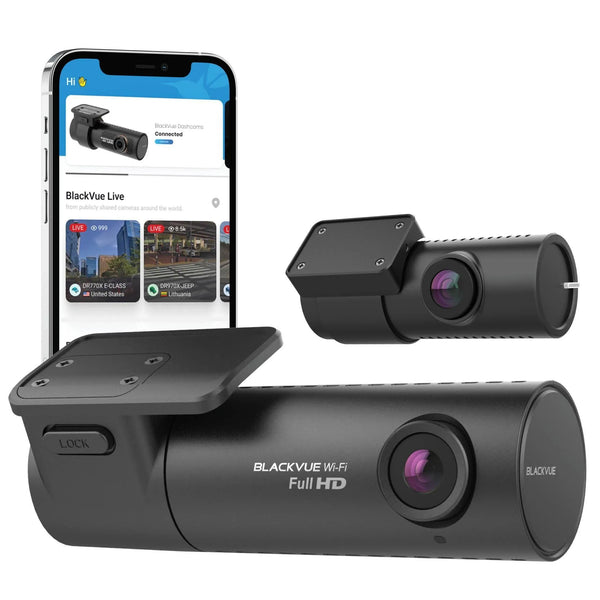
For everyday drivers, the practical lesson is simple: know how your camera saves event files, keep the memory card healthy, and back up important clips before your next drive. If you are shopping now, start with the Dash Cam New Buyer's Guide, compare current options in the dash cam collection, or move straight to a 2-channel dash cam if you want front and rear context.
Features that make dash cam footage useful evidence
Useful evidence needs clarity, time context, storage reliability, and fast clip preservation. A cheap camera can record a drive, but that does not mean it will produce useful evidence when lighting is ugly, the road is fast, or the memory card is failing.

Video clarity
Look for real detail, not just a big resolution number on the box. 2K QHD is a strong baseline for everyday drivers, while 4K UHD front recording gives you more room to capture vehicle detail at distance. Sony STARVIS 2 sensors and HDR are especially useful for harsh daylight, headlights, shadows, and night driving.
Parking mode
Parking mode protects the hours when you are not in the vehicle. A parked-car impact, vandalism attempt, or hit-and-run in a lot may happen while the ignition is off. For longer coverage, pair a compatible dash cam with proper hardwiring or a battery pack such as the BlackboxMyCar PowerCell 8.

GPS, storage, and reliability
GPS can preserve location and speed context. Reliable storage matters because corrupted files are useless when you actually need them. Use a high-endurance card, format it on schedule, and learn where normal, event, and parking-mode clips are stored before something happens.
For installation help, use the Dash Cam Installation Hub or browse the VIOFO collection if you want strong value with proven image quality.
Three evidence-first dash cam setups from BlackboxMyCar
The best dash cam for evidence is the one that records clearly and makes important clips easy to save. These three picks cover the main evidence-focused buying paths: everyday front and rear value, compact front-only recording, and higher-detail 4K UHD front coverage.

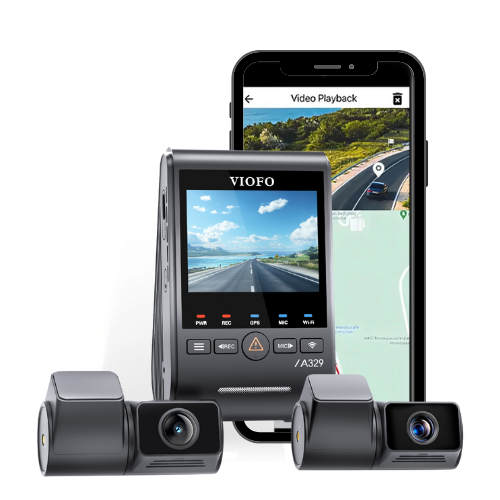
VIOFO A229 Plus 2-Channel 2K QHD Sony STARVIS 2 Dash Cam
Best for front and rear evidence value. This is the practical pick for most daily drivers because it gives you 2K QHD front and rear recording, Sony STARVIS 2 image quality, GPS, Wi-Fi, voice notifications, and parking-mode support without forcing premium pricing.
Why it fits: a strong everyday front and rear setup for drivers who want reliable evidence coverage without overbuying.

VIOFO A119 Mini 2 2K QHD Dash Cam
Best for simple front evidence. This is the small, straightforward option when you want strong front-road detail from a compact 2K QHD camera. It is not as complete as a 2-channel system, but it is a smart entry point for drivers who mainly need front-view proof.
Why it fits: a compact front-only option for drivers who want a simple camera with sharp road detail.

VIOFO A229 Pro 2-Channel 4K HDR Sony STARVIS 2 Front and Rear Dash Cam
Best for higher-detail front footage. This is the higher-detail 2-channel choice when front-camera clarity matters most. The 4K HDR front camera and Sony STARVIS 2 sensors give you a stronger shot at useful detail in difficult light.
Why it fits: a higher-detail 2-channel setup for drivers who want stronger 4K UHD front footage plus rear context.
If the claim angle is your priority, I would push most drivers toward a front and rear setup first. The VIOFO A229 Plus 2-Channel is the easiest value pick. The VIOFO A229 Pro 2-Channel is better when front-camera detail matters more. The VIOFO A119 Mini 2 is the compact front-only option if you want to start simple.
FAQ: dash cam evidence and saving footage
Can dash cam footage help an insurance claim?
Yes. Dash cam footage can support an insurance claim by showing the incident sequence, vehicle position, direction of travel, road conditions, and what happened before or after the impact. It does not guarantee claim approval, but it gives the adjuster something concrete to review.
How do I save dash cam footage after a crash?
Park safely first. Then lock the event file, download it through the app, or remove the microSD card after the camera powers down. Save the original clip, keep at least 30 seconds before and after the incident, and make a second backup.
Should I edit the clip before sending it?
No. Keep the original unedited file. You can make a shorter viewing copy if needed, but police or insurance may want the original file with metadata, timestamp, and GPS data intact.
Is a 2-channel dash cam better for evidence?
Usually, yes. A 2-channel dash cam records front and rear angles, which helps with rear-end crashes, hit-and-runs, lane disputes, and parking-lot incidents where a front-only camera may miss the key movement.
Shop now: If you want a setup built around useful evidence, start with BlackboxMyCar dash cams and choose the cleanest front and rear coverage you can justify. Good footage is not about drama. It is about having proof when the story gets messy.